Macy Gray at The Bridgewater Hall

She tried to walk away and she stumbled…

Put it down to my musical education (or lack thereof) as a child but before last night I’d never heard the name Macy Gray. So it was with trepidation that I was dragged along to her concert in Manchester, my Dad having given up his ticket due to a bout of man-flu. Call me cynical but I can’t help thinking that he had the good sense to look up reviews online beforehand and his immune system reacted accordingly. All I knew going in was what I’d found on a five-minute Spotify search. But somehow the cool, soulful singer with the raspy voice wasn’t the Macy I saw at the Bridgewater Hall.

An hour and a half in, having rushed our pre-concert eats to make it in time, we found Macy hadn’t made the same effort. All we’d been graced with was about four songs from an opening act whose name was a muffled, inaudible sound (we found out later it was Rothwell) and Boogie Wonderland on repeat. Hardly the best way to get an audience – depleted in numbers though it was – in the mood.

By the time Gray finally stumbled onto stage in a get-up I can only compare to Chandler’s Dad in Friends, the idea of deserting had already formed in the back of my mind. There was a sense that what we were watching wasn’t a performance we’d paid to see, but a dress rehearsal for which the main act had only half-bothered to turn up. Apparently, it takes ten minutes to swap feather boas – who knew?

We spent more time looking at the back of her head and listening to her drivel about how “We’ve come all the way from Los Angeles, California just to dance with you,” than actually listening to her sing. No artist is particularly great at the mid-concert chat with the audience, but her statement (which sounded oddly religious in its exclamation) that “Google says the women in Manchester have the best vaginas” was enough to get feet moving and doors swinging. After that, I got the impression from what little audience remained that no-one was really into it – apart from the couple in the balcony who were a little too into it.

I couldn’t help but see the whole charade as a little bit tragic. The 15-minute drum solo, as pleasant as it was, was not what we were there to hear. Nor was the karaoke-esque stream of covers, however fitting Radiohead’s Creep felt. I would, however, like to thank the woman in the third row for her (probably futile but nevertheless entertaining) attempts to get the rest of us up dancing. She was living proof of Gray’s own admission that “the more you drink, the better we sound”.

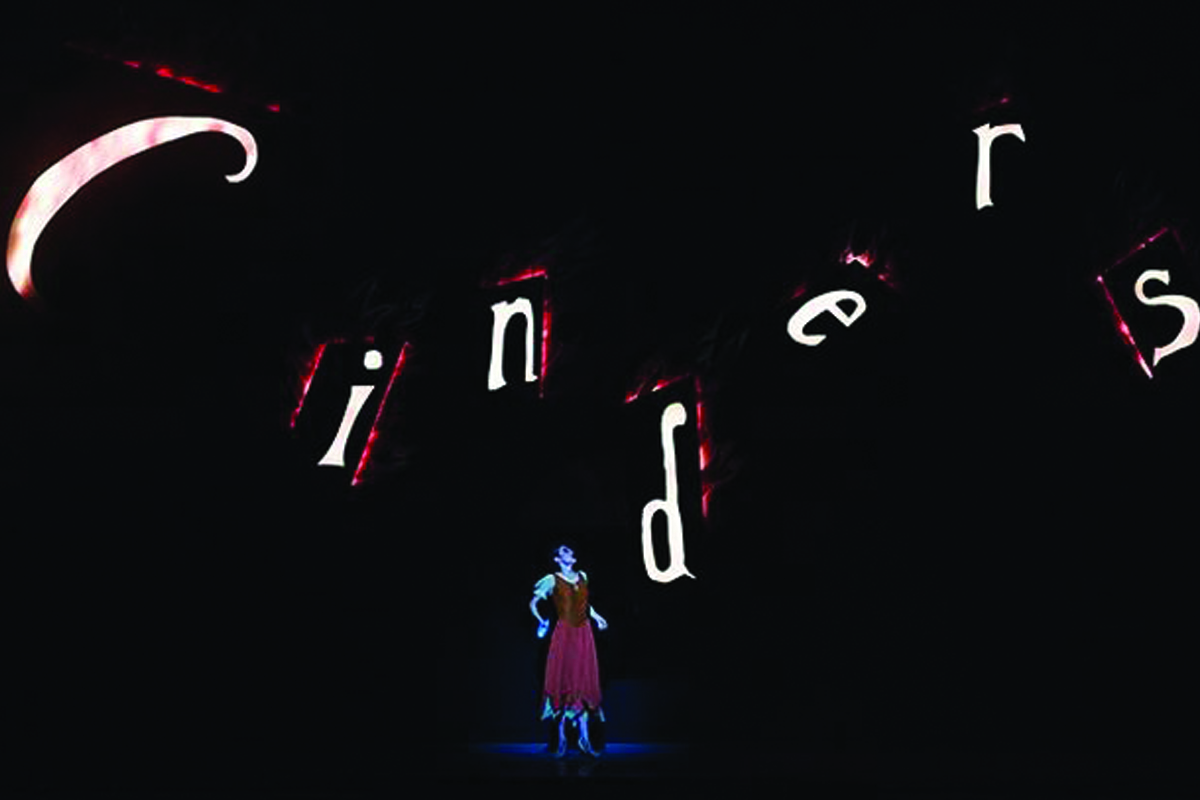
Cinderella: new work by Northern Ballet

I’ve seen Northern Ballet perform before. I’ve liked Northern Ballet before. I genuinely wanted this production to be a success. But somewhere in the space between pseudo-panto and epic, heart-wrenching, ‘how-do-they-do-that-with-their-bodies?!’ ballet, David Nixon’s pumpkin drove right into the abyss.

The Russian backdrop makes sense and lends the production – I’m hesitant to call it a ‘work’ – a certain vibrancy. It’s responsible for the most dynamic male dance deserving that title – after all, who doesn’t love a bit of cossack dancing? And let’s not forget the circus tricks and Blackpool-promenade magic – they’re always crowd-pleasers. As for Duncan Hayler’s set design, it’s clear to see that the costume department took the bulk of the £250,000 budget. It’s a shame, really, because certain moments were really rather pretty and I got the distinct feeling that what we saw on stage didn’t quite match up to what he probably envisioned. The ice-skating scene especially was reminiscent of Matthew Bourne’s Nutcracker. With its frosty glow working in perfect harmony with the dancers gliding convincingly across the ‘ice’, I could envisage a winter wonderland in the middle of Manchester. It was one of the few heart-warming moments. For the most part, the set was a lot less self-indulgent than the choreography and a lot more flatpack-fairytale than I’d have liked – more rags than riches.

I only wish my own enthusiasm for this production matched that of the dancers on stage. Perhaps their over-zealous applause after every solo was over-compensating for their lack of oomph in the rest of the show? Of course, the dancers move beautifully and are technically exceptional, but their lack of unity and je ne sais quoi distracted from the overall impact of the choreography.

There were elements of Nixon’s work that showed real ingenuity – the kind of flair and creativity you’d expect from a choreographer of his calibre. A pair of fur coats leap into action as carriage-leading huskies and the stepsisters’ excited allegro injects a burst of energy into the opening act. Tobias Batley gave good Royal as Prince Mikhail, but it was in interacting with his friends when his real boyish charm shone through. And my, doesn’t he have a nice bum? I envied good ol’ Cinders in her duet with the Prince. Not because of his bum – lovely though it is – but because in that one dance the two shared such chemistry that I genuinely believed they were falling madly in love.

If the rest of the show had that level of emotion driving it, I wouldn’t have been left thinking that Nixon’s choreography had suffered a serious disservice. That said, I was impressed with Nixon’s refusal to shy away from the tricky transitions so many choreographers avoid; Cinderella blossomed from child to teen with all the grace and ease of dropping a pan – literally – and her transformation into the belle of the ball gleaned an audible gasp of awe from the audience. Unfortunately I almost missed it in the dull haze of the first 50 minutes. It took me until the end of act one to truly engage with the show.

There are a lot of things which are right about Cinderella, they’re just overshadowed by the things which are wrong. Perhaps I wouldn’t be so bitterly disappointed if I’d been expecting to see a beginners-guide-to-ballet, but for a company and choreographer so renowned in the realms of high quality British ballet, I couldn’t help but feel that Nixon’s fairy-tale just fell one jeté short. Is this a magical adaptation of Cinderella? Yes, but only for about five minutes.

Mark Bruce sinks his teeth into Dracula

Ask anyone for the first name of the choreographer and it’s pot luck whether they say “Christopher” or “Mark”. For the latter, dance runs in his blood but his father’s legacy has never cast a shadow over his work.

“I never really thought about having that above me – who my father is – because I was so obsessed with what I was doing.” He laughs understandingly at my fan-girl moment over his childhood spent touring with the Rambert dance company and reflects that “the whole heart of that culture – that fantastic time in the 70s at Rambert – is inside me”. So surely a career in dance was inevitable? Turns out, that was not the case. “I wanted to be a comic strip artist.” Right. Not quite the answer I was expecting.

And so, as I sit in a cold and echo-y classroom with Mark Bruce on the other end of the phone, I’m struck time and again by the fact that this man is not what you expect. He’s so much more than a choreographer, which is perhaps what makes his work so special. “Because I did lots of other things before dance – movies, music, visual arts – I’ve actually got something to choreograph about.” Asked about what inspires and motivates him, Bruce concludes that he “would never ever be able to choreograph the equivalent of what Jimi Hendrix could do on a guitar. That sets a benchmark for me”.

The question on my lips was, after a career spanning over 20 years, why stage Dracula now? “I read Dracula when I was about nine or ten and have always loved re-reading it, always come back to it. I thought about doing a version of Dracula – in some form or other – even before I thought about dance.” So what made now the time to give it a go? “Part of the reason I put off making it for so long was because you need a lot of ingredients to get it right and there’s no simple answer to how you do that.”

It’s clear to see that this production has been through a rigorous editing process – you don’t get a show sharper than Dracula’s teeth overnight. Whatever ingredients Bruce was holding out for were worth the wait.

This weekend, as Manchester was lit up with Diwali celebrations, I was exposed to the artistry that lurks in the shadows as I found myself at the Contact theatre in Manchester amid a crowd of creative-types and creatures of the night (this is part of the Manchester Gothic Festival, after all). I can’t help but feel a little smug that I’ve managed to bag myself the best seat in the house at a show for which tickets are so coveted you’d kill for them. *cue inward evil laugh*

I wait with baited breath as the chap next to me spies Braham Murray’s name in the programme and whispers something along the lines of “kiss of death”. As the lights go down and chills run down my back, I wonder if they’ve actually lowered the temperature in the room.

It’s clear from the first note that this isn’t the commercialised, cult-inducing image of vampires we’ve grown used to in modern films. Instead, this is a much more traditional vision of the illustrious Count and his cronies. The lighting is used simply and strikingly, the set is dark and eery, and the music is divine. Bruce confirms this: “I have a great respect for traditional methods of theatre.” And it’s a good job he does because it’s the simplicity of the production that stops Bruce’s biggest fear – “just making it stupid” – being realised. There are times, when the parallel staging errs dangerously close to over-complicated and the temporary lapses into jovial cheese-fest come close to school play territory, but the depth with which Bruce approaches this proves its salvation. As he very readily admits, “I have a very particular dramatic aesthetic.” Does he ever worry people won’t ‘get’ it? “If I ever feel like I’m getting too weird with my work or that people won’t understand it, I go back to David Lynch and watch his work and realise it doesn’t matter.” And it doesn’t.

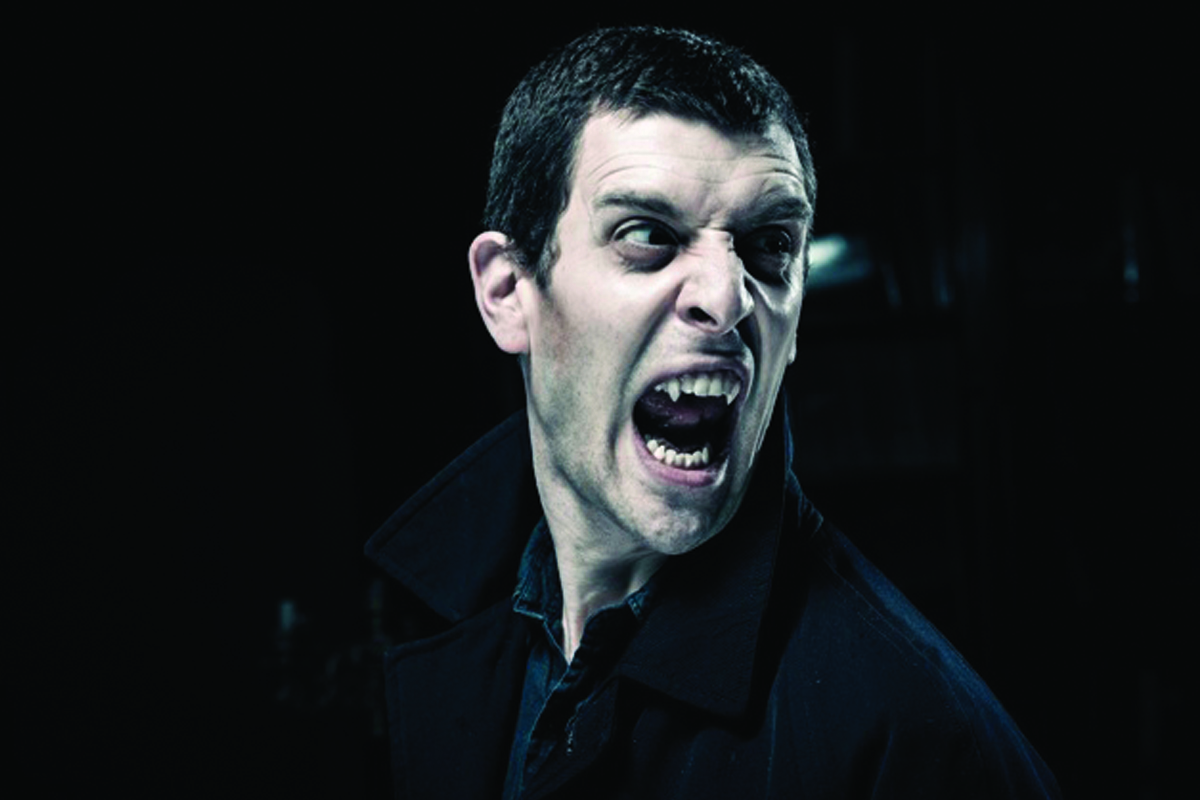
This production is a dream – a beautiful nightmare if ever such a thing existed. It seems fitting then to label it a work of contrasts – a true gothic tale in its exploration of light and dark, innocence and evil, love and lust. From the first step, Jonathan Goddard as Dracula shines – and no, not in an Edward Cullen stepping into the light kind of way. It’s clear to see why Bruce chose him. “In the book, Dracula doesn’t really do anything – he disappears, he’s alluded to, he’s very still. But meeting Jonathan helped me realise, he’s a predator, a wolf, a bat, a nobleman – all these different things that have different types of movement.” It’s certainly true that with his wide, bloodshot eyes and lithe figure, Bruce’s Dracula is every inch the man for the job. As actors are taught to know their motive for every line, Goddard’s performance could be paused at any moment and perfectly portray his sultry story.

What makes it so easy to be seduced by Dracula is that it encompasses so many facets of the Count’s (super)natural instincts. The fast-paced and folksy complement the surprising bursts of comic relief which in turn contrast the dark and provocative. I find myself thinking that the Vampire Brides must have had a hoot in the studio practising their screams. All together now! The stunned silence at the end of each act before any single audience member managed to retrieve themselves from their trance-like state to applaud speaks volumes. Bruce wanted the audience to be “taken on a journey, even if they can’t define its resolution”, and that’s exactly what he’s achieved.

Its biggest pitfall? Too short a tour.

Young Theatre Reviewer 2017: Romeo & Juliet

I recently won Northern Soul and HOME‘s young theatre reviewer competition, and got the chance to review HOME’s production of Romeo & Juliet – enjoy!

Phwoar! Before we start this review, can I just take a moment to applaud the casting crew over at HOME for bringing us the sensational piece of eye-candy that is Alex Felton? Thank you.

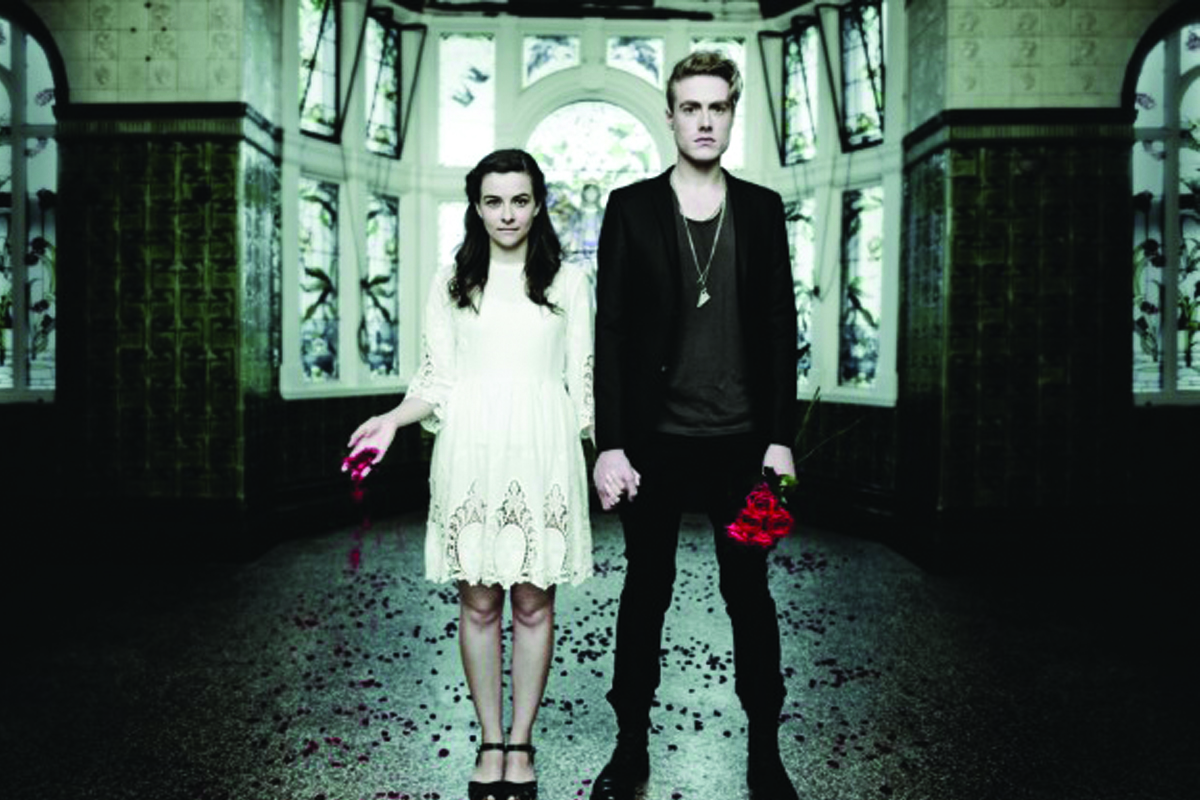
So, Romeo & Juliet is ‘immersive’ in every sense of the word. But HOME’s first original offering was never going to shy away from the spotlight. With the somewhat surprising choice of location of Victoria Baths, this production was bound to stand out. The script may have been reshaped and revived many a time over the years but make no mistake, this show is breaking the mould.

Do the monumental roles weigh heavily on the shoulders of leads Felton and Sara Vickers? Not at all. In fact, Vickers says that realising the vision of German director Walter Meierjohann was “liberating”. Her biggest challenge? “Learning to let go.” With such an extraordinary setting, it’s not just the cast but the audience who are thrown in at the deep end – excuse the pun. This production feels like someone grabbing you by the shoulders, removing the rose-tinted glasses of productions past and forcing you to see Romeo & Juliet through a fresh pair of eyes: HOME’s eyes. Letting go is not an option but a necessity.

Felton remembers the first few shows as an evolution, a time when neither he nor the spectators were sure of this bold new direction – a tentative testing of the waters, if you will. He laughs: “It took a while to realise ‘this is ok.’” And yet the result of that evolution is such certainty in the creative vision of HOME and the cast that you can’t help but be consumed by the action.

From the offset, the hustle and bustle of the audience creates an atmosphere of anticipation as those lucky enough to have purple promenade wristbands are directed to their positions. Young girls ponder whether their heads would have bobbed above the water in years gone by, while others try to suss out the show – was that a door that just slammed? Are those an actor’s shoes I see?

Despite being steeped in the history of the Baths, Ti Green’s set design has an air of modernity about it. The juxtaposition of the Punch & Judy-esque changing rooms with a reflective sliver stage created an almost inexplicable sense of, well, kitsch. The choreography may have suggested otherwise but there was no conflict when it came to the set – Green pulled off a seamless transition from 16th century Verona to post-Communist Eastern Europe.

Where the Capulets lend themselves well to an almost Mafia-like unit, Mercutio seems to have raided the wardrobe of Keith Lemon, with fantastically frivolous consequences. Little black Calvins lend Romeo an edge, and who could help but love the debauched disco that evolved from the masquerade ball? Full of charm and dynamics, even the lighting of a cigarette is transformed into music. Sat, feet dangling into the pool, there are moments when you feel so involved that one small step could land you at the mercy of Tybalt’s knife, or plunge you into the depths of confession with the friar. What HOME has created is a complex web of tragedy embraced by what Felton sees as the “happy accidents” of Meierjohann’s directorial genius. How he stumbled across the idea to mess with one of Shakespeare’s most memorable love scenes – the one which has inspired countless spoofs (and who could forget the Taylor Swift song?) – is unknown. Would Shakespeare have been insulted by a twerking Mercutio and Romeo breaking into a verse of Crazy In Love? Possibly. But does it work? Definitely.

Vickers puts in an exceptional performance as Juliet, but if she could go back in time and ask the Bard himself how he managed to capture the essence of a 13-year-old girl so brilliantly, she would. As she put it, “I was a 13-year-old girl, you weren’t. How did you get it so bang on?”

Similarly, Felton gives Romeo a forlorn hipster-vibe that somehow works against the intensity of the story. And together they capture something which even Vickers recognises “cannot be played or forced”. They capture the idea of a ‘big love.’ So if it can’t be played or forced, how do you go about creating that? An infectious giggle is shared. “I showed Alex this quote about soul mates that said ‘I feel like I’ve known you my whole life and how can it be that we’ve only just met but you feel so familiar to me?’ I think that’s what we tried to get across.”

However, it’s not just the star-crossed lovers who shine here. Rachel Atkins does a fabulous turn as the nurse; her character possesses that distinctly old European comfort that reminds me so much of my Grandmother, and Griffin Stevens provides some comic relief as Peter – a perfect example of the Shakespearean fool.

Don’t get me wrong, there are still a few things to be ironed out – the seated audience had to crane their necks to see from above and while the concept of three separate locations was exciting, it did mean moving sometimes in the middle of a scene. However, these things are trivial and pale in comparison to the feat that HOME has managed. The last scene left me lost for words – and, trust me, that doesn’t happen often. But, I suppose that’s a good thing; if I had the words to do it justice in gushing, it really would ruin the surprise. At the end of the day, this is a production my Dad would hate (purely because he so often falls asleep in the theatre and in this he most definitely could not), but, in theatre terms, that is one huge compliment.

How to style Steranko for Summer

Following on from my guest blog on Steranko’s website last week (which you can also read here), I decided to go and raid their stock for some great examples of making layers work for summer. Styling and photography by me. 

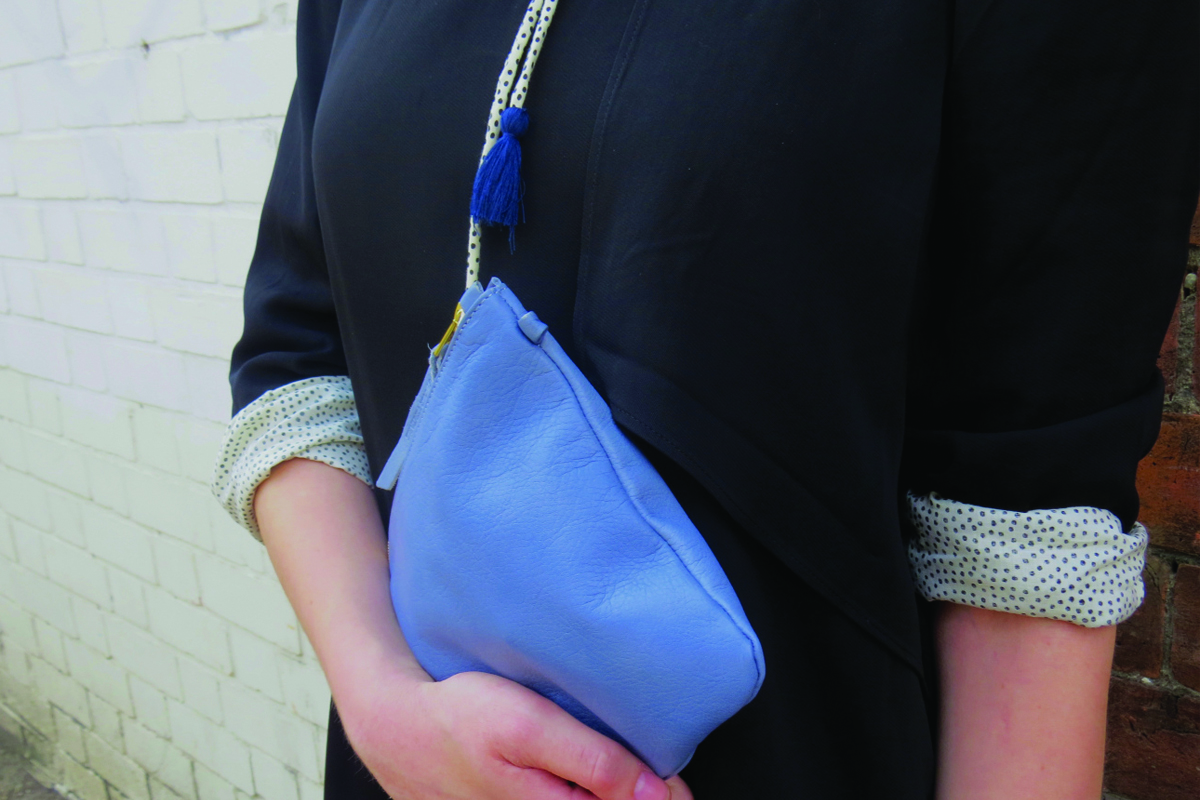
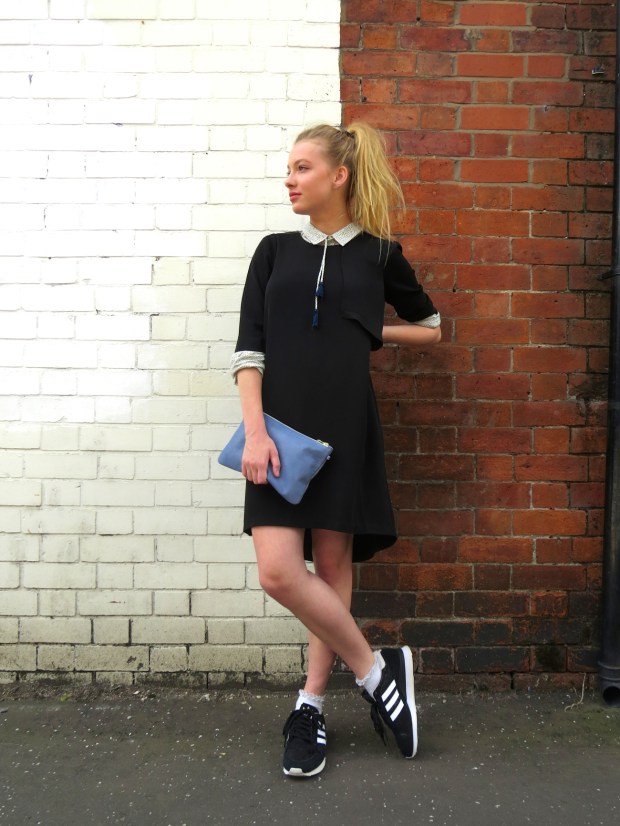
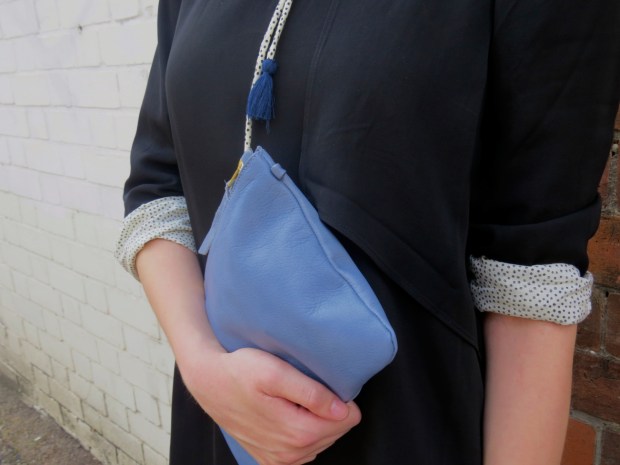
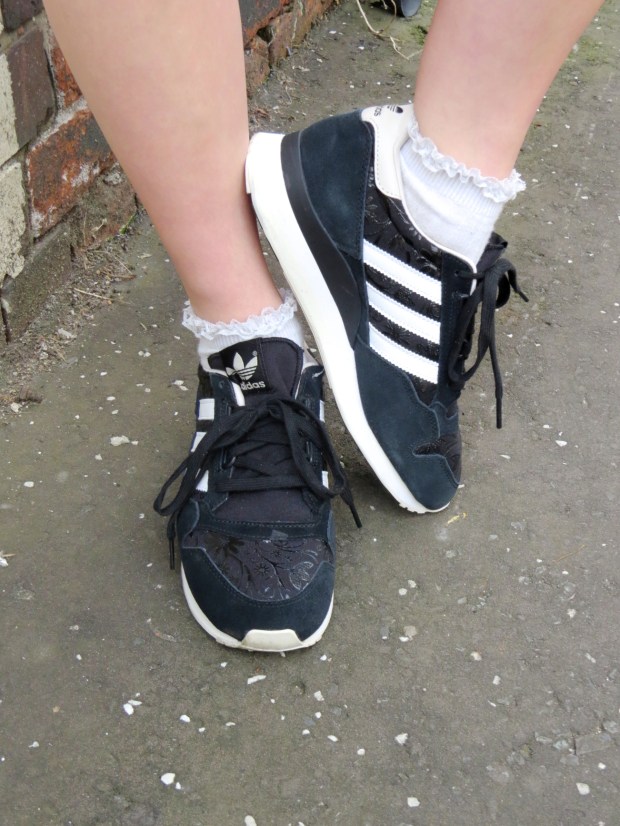
The Anouk dress works perfectly over this spotted shirt, and the Lagoon clutch bag adds just the right amount of chic to contrast the Adidas trainers.

img_3344untitled-1img_3358

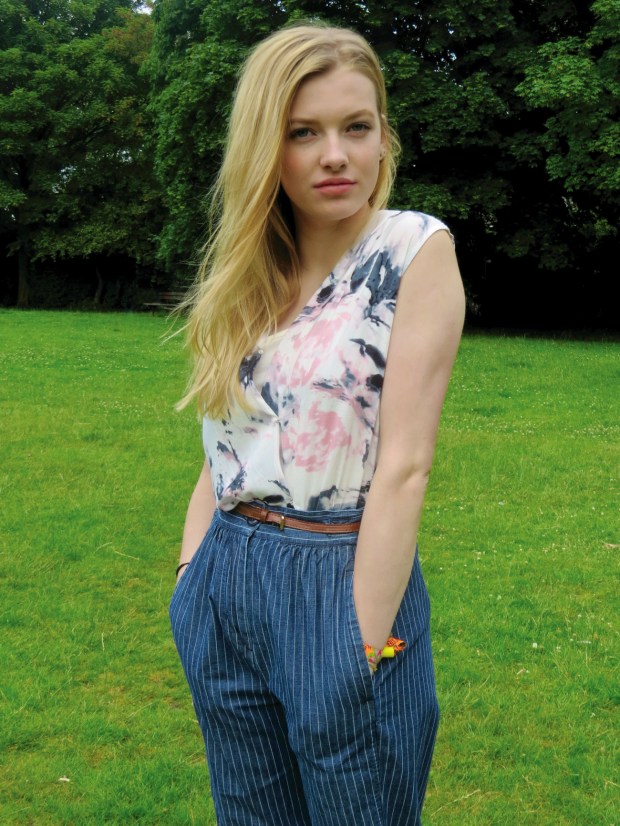
This second outfit may not exactly constitute ‘layering’ but I couldn’t resist the print clashing in this outfit. The ‘Sam’ blouse can be worn open for a more relaxed sort of layer. It’s over a plain vest top here, but might also work well with a pop of colour underneath or a simple cardigan on top. These pants are a divine fit, and whilst these shoes are my own, Hasbeens would do the job very nicely indeed!

img_3501kugvdhcbv

The lighter colour palette of this Maison Scotch top and scarf combination (available in store) is perfect for the summer months.

img_3563img_3574

Young Enterprise: New Charity Beanies!

On a slightly random note (and one of shameless self-promotion), I thought I’d take a moment to share this video with you all. I made it last week as a promotional video for my Young Enterprise company, The Beanie Shop. The beanies modelled in the advert are part of our latest range, ‘SURVIVOR.’ The most recent in a growing collection of slogan beanies, ‘SURVIVOR’ was created to raise awareness for the inspirational people that survive mental and physical illnesses. £1 from every beanie we sell goes to Beat and The Teenage Cancer Trust, meaning these beanies not only look good, but do good. What’s more, they allow our customers to speak their mind without saying a word.

To read the full ‘SURVIVOR’ story, or buy a beanie, head over to www.thebeanieshop.co.uk

And just because they’re so pretty and I’m so proud, here are a couple of our promotional photos. Styling, creative direction and photography by me.

img_3086img_2618img_0257img_0203img_3005

Travel Under the Sardinian Sun

It’s no secret that I’m proud of my Italian heritage, but what I’m not so proud of is the fact that despite this, I’ve only been to Italy twice in my life. To be fair, I get a taste of grand old Italia every time I eat at my Nonna’s house (there’s nothing quite like Italian hospitality), and I’m not technically counting day trips to Rome and Florence (ah, the joys of cruise!). That said, I would love to see more of my maternal ‘homeland.’

Having been back in the drizzling cold weather I so lovingly associate with home for almost a week now, I’m really feeling the distance between me and the Sardinian sun. Not even the slight tan I acquired (no mean feat, considering I inherited my Dad’s Liverpudlian skin) can comfort me. I’ve actually taken to scrolling through photos of sunsets and beaches from our holiday; whoever said post-holiday blues were easy to cope with obviously never lived in Manchester.

But, anyway, here are a few tips from my family and I, should you ever find your lucky self in Sardinia…

Visit Stintino Beach: If ever there were a beach that looked exactly as it did in the brochure for Paradise, it was this one. With clear (and warm) blue waters and the softest sand I’ve ever seen, even the market traders carrying knock-off Louis Vuittons and blankets by the bar couldn’t stop me from recommending it. Oh, and be sure to order an “Isla Piana” sandwich for lunch (mozzarella, tomato, olive oil and oregano – you can thank me later).

img_2369img_2376img_2378

Take a trip to Castelsardo: Another beach in the Province of Sassari, Castelsardo offers a secluded bay experience, perfect for a quiet day catching rays. What’s more, the water is brilliant for snorkelling, and it’s only a short walk from the town, which boasts a colourful array of restaurants and bars.

img_2451img_2494img_2505

Dine at Il Merlo Indiano: The villa we were staying in was just a 10 minute walk outside of Valledoria, so we stumbled upon this gem of a Pizzaria on our way into the town. The staff were friendly and attentive, and the owner Rafaelle was particularly welcoming. Whilst our stay was only a week long, we ended up eating here three times. The pizza (which is produced in one of Sardina’s oldest wood-burning ovens) was exceptional and the variety of over 100 pizzas meant you were never short of choice. My personal recommendation would be to always go for Buffalo mozzarella and keep it simple (Il Gentile is lovely).

img_2032img_2120

Try a Latte Macchiato: I’ve never really been a big coffee fan, and would usually question the sanity of someone who suggested drinking it in the heat, let alone on a beach, however this frothy and revitalising drink became my firm favourite in Sardinia. The best one I tried was in the snack bar on San Pietro beach, Valledoria, but Café Pavone in Alghero also made a good one.

Scream for Ice Cream: If there’s one thing Italians are famous for (ok, maybe one of a multitude of things) it’s gelato. The most refreshing and delicious temptation Italy has to offer, there is no cafe worth its salt that doesn’t sell it. The best one I had was in Alghero, in a little ice-cream ‘cave’ called Gelateria i Bastioni. A little hint: you can’t go far wrong with Pistachio or Lemon.

dvfbgnh

Learn how to play Italian cards: One of my fondest childhood memories is of my Nonno teaching me and my siblings how to play with Italian cards. Growing up in a big family with a love of long mealtimes, card games have often formed the post-dinner entertainment that kept us children from climbing up the walls. The particular type we use are Napoletane, with the two main games being Scopa and Briscola. Easy to pick up and beautiful to look at, these cards will provide hours of fun and may even spark up a competitive streak! If you can read Italian and fancy learning, try here.

DSC02541.jpg

Manchester Histories Festival at the Town Hall

When the School of Arts, Languages and Cultures invited me to blog about the Manchester Histories Festival, my hopes weren’t exactly high. I certainly didn’t expect that when I rocked up to the Town Hall yesterday afternoon I would be joining a bustling crowd, all eager to get inside and have a nosey.

The thing about living in a city as large and diverse as Manchester is that you carve out your own little version of it; a bubble tainted only by the experiences you open yourself up to. And so, it’s easier than you think to forget just how varied and vibrant that city is. Manchester is comprised of millions of these personal bubbles, each adding to the overall picture of the city’s heritage. What the Festival showed me was the enthusiasm felt by so many living in Manchester about so many different things. The old Belle Vue Zoo – now long since closed – commissioned acting group The Larks to bring forgotten stories to life, whilst in the room next door, a man collected visitors’ views on where the new Peterloo memorial should go. Rambling clubs welcomed new members, and civic societies opened the doors of the suburbs’ hidden gems. From people who grew up here to students who have moved here, all were enthused by the rich history they witnessed. The most striking aspect of all of this was the combination of past and future; the way that some aimed to educate on days gone by, whilst others sought to establish new links with our past, encouraging visitors to study the history that is evidently still so relevant today.

When the festival started in 2009, it set out to “celebrate and provide learning and education about the City region’s histories and heritage.” Five years down the line, I’d say that has been achieved. The Manchester Histories Festival ensures that Manchester’s colourful past will not be forgotten, and if just one other person felt as I did yesterday – that their eyes had been open to something so unjustly overlooked – then the festival has proven a success. Making history accessible to scholars and families alike, this is one part of our heritage which should not be allowed to fall by the wayside.

The Manchester Histories festival runs annually, this year from 21st-30th March. For more information, please visit http://www.manchesterhistoriesfestival.org.uk

Palaver Festival: The Diary of Anne Frank

Yesterday was a day of festivities, as I immersed myself in not one, but two Manchester-based celebrations. The Manchester Histories Festival  was great, and led me to attend a play in the evening at the Contact Theatre (you know, the one that looks like an industrial plant but is actually really cool inside). That play was The Diary Of Anne Frank, and it was put on by the German Society at the University of Manchester. Here’s how I got on…

Faced with the challenge of performing a piece so historically significant and somewhat emotionally taboo as Anne Frank – and in a language nowhere near as familiar as my mother tongue- I’d probably run with fear. That said, as an audience member at the Contact Theatre tonight, my experience was hardly life changing. And when asked if I wouldn’t mind putting a sticker on a chart to show my level of enjoyment, I had no choice but to stray into the “satisfactory” zone. In light of that, I may be being slightly critical, as my “satisfactory” was one of just two; it seems the rest of the audience branded it “excellent.” I suppose my experience was somewhat tainted by Anne’s seemingly naive and overly-cheerful interpretation. However, given how difficult a play it is to handle, and that it was acted entirely in German, it was an interesting adaption to watch. And whilst I whole-heartedly encourage the promotion of foreign plays and festivals such as Palaver, this play was not one that gripped at my heart strings and left me in tears as the original diary did. With words so moving, any attempt to adapt them seems ever so slightly feeble. I suppose the problem stemmed from the fact that- despite brilliant costumes and a well-designed set – the actors were not actors. They were German university students passionate about their subject – and it showed. The focus dragged not to the words that have endeared millions to the story of Anne Frank, but to the pronunciation of the German- and how oddly it mismatched the subtitles. All in all, the effort was a bold one; it just didn’t necessarily live up to my expectations.

Poetry by Heart Competition, London

As pointed out to me this weekend, ‘the problem of poetry’ is something that has plagued school curriculums for years. How do you engage young people in emotional complexities often beyond their own experiences? How do you persuade them that what they see as out dated and dull is actually a riveting expression of the relatable and real?
All tough questions, but the answer has been well and truly hit on the head by none other than former poet laureate Sir Andrew Motion.

This weekend, I attended the regional and national finals of Poetry By Heart, a competition dedicated to the enrichment of young people via the medium of the spoken word. With a particular focus on memorisation (that’s the ‘by heart’ bit), the competition encourages it’s participants to really absorb the words dreamt up by poets past and present, before relaying them to an audience with the added flair of personal interpretation.

That may all sound too much like hard work, but I can’t stress enough how enlightened I feel after this weekend. I entered as a performer; I’ve done LAMDA exams in the past that have involved poetry, so I kind of thought ‘why not?’ But what I’ve left with is more than the experience of an all-expenses paid weekend in London and the chance to perform at The National Portrait Gallery. I’ve left with a sense of pride at having been involved in something so…vital. It may only be in its second year, but I’ve a feeling that Poetry By Heart will run for years to come. This might all seem very gushing, I know.
What competing has shown me is that what a poet writes can often be lost in translation, if given a voice that doesn’t do it justice. But when placed in the right hands (or should I say mouth?), words can be brought to life in a way so moving that it would be impossible to ignore. And that is right: poetry is impossible to ignore. As one girl rather randomly suggested, “humans are poems with feet.” Slightly odd, yes, but something to think about none the less.

Recommendations: A round-up of my personal favourites from the competition.

All poems are available from the Poetry Archive